
Biodegradable
Materials and
Compostable
Fashion
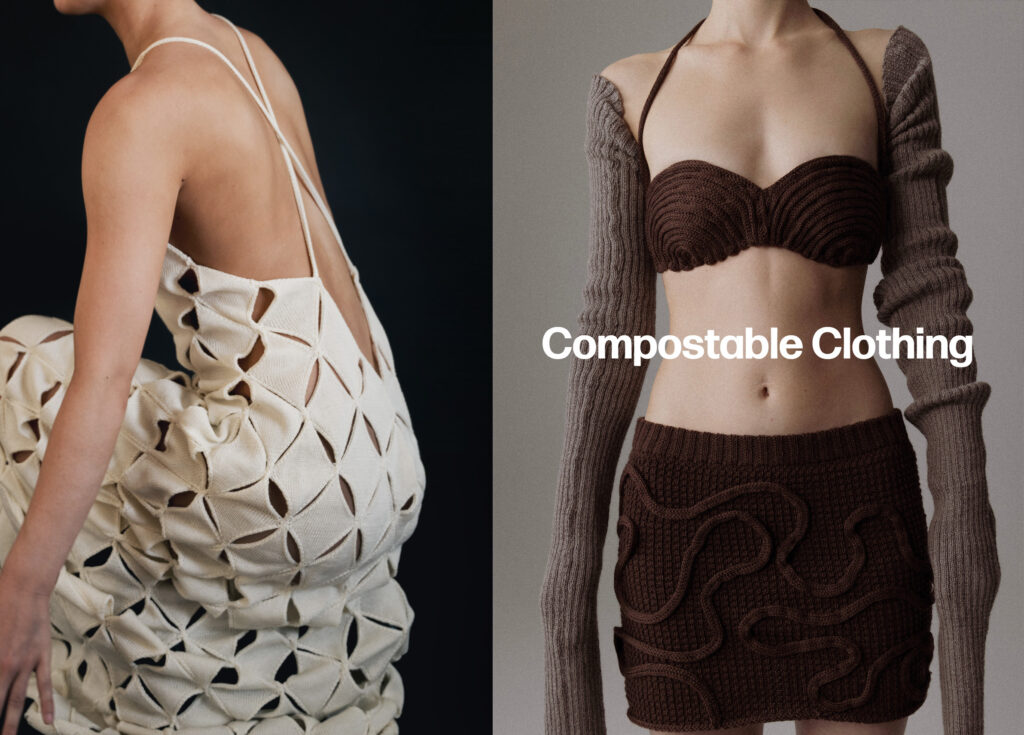
After more than 30 years in the fashion industry, clothing designer and concept developer Sanne Moth has, in recent years, turned her focus towards the idea of ‘compostable fashion’. As part of this shift, she launched the magazine Muceum, which explores how to improve the conditions for developing meaningful ideas rather than simply generating more ideas, and inspires design professionals to choose biodegradable materials. Alongside her freelance design practice, Moth explores biodegradable materials at the intersection of art, technology and fashion design in the BioLab in Vejle. She combines this work with her unique cotton and wool knitwear designs, created partly on a Silver Reed hand lead knitting machine and partly by hand in her studio.
Impermanence is Life
Most fashion is designed to last far longer than it’s wanted. Durability – usually one of the central pillars of quality clothing craftsmanship – has become a problem in a field as transient as fashion. The plastics and synthetic fibres used in most apparel today can take centuries to break down, yet many garments are discarded after just a single season.
What if we in the fashion industry embrace impermanence?
When embracing the concept of impermanence, we allow short-lived fashion to exist without taking a toll on our environment and our mental health. Bringing back focus on local artisans and combining traditional methods with new technologies is the future.
The Current
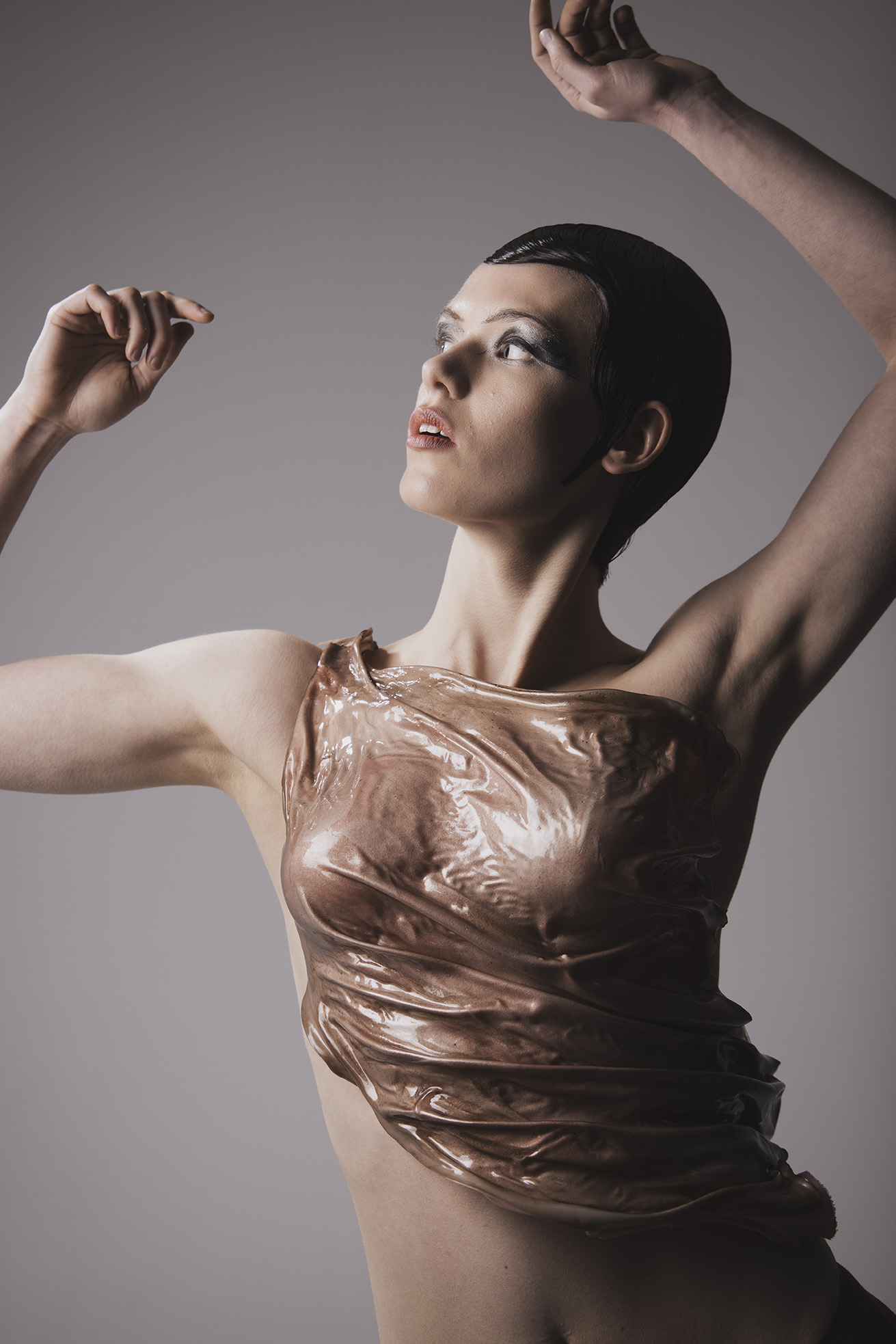
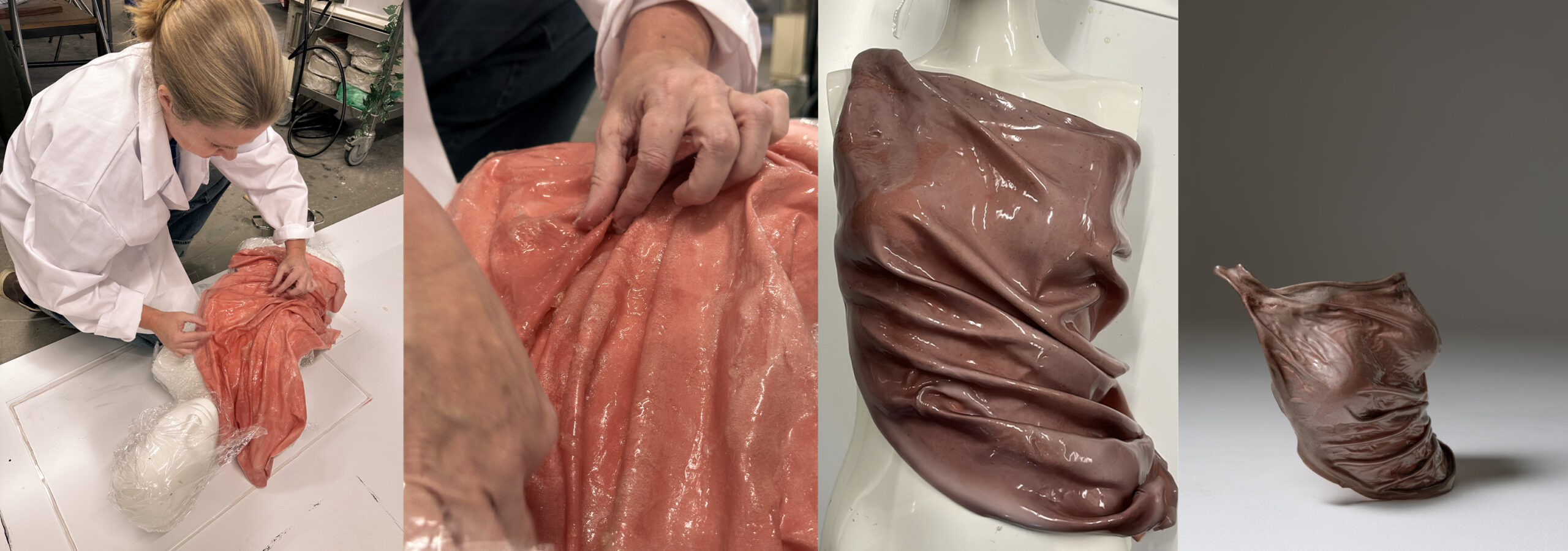
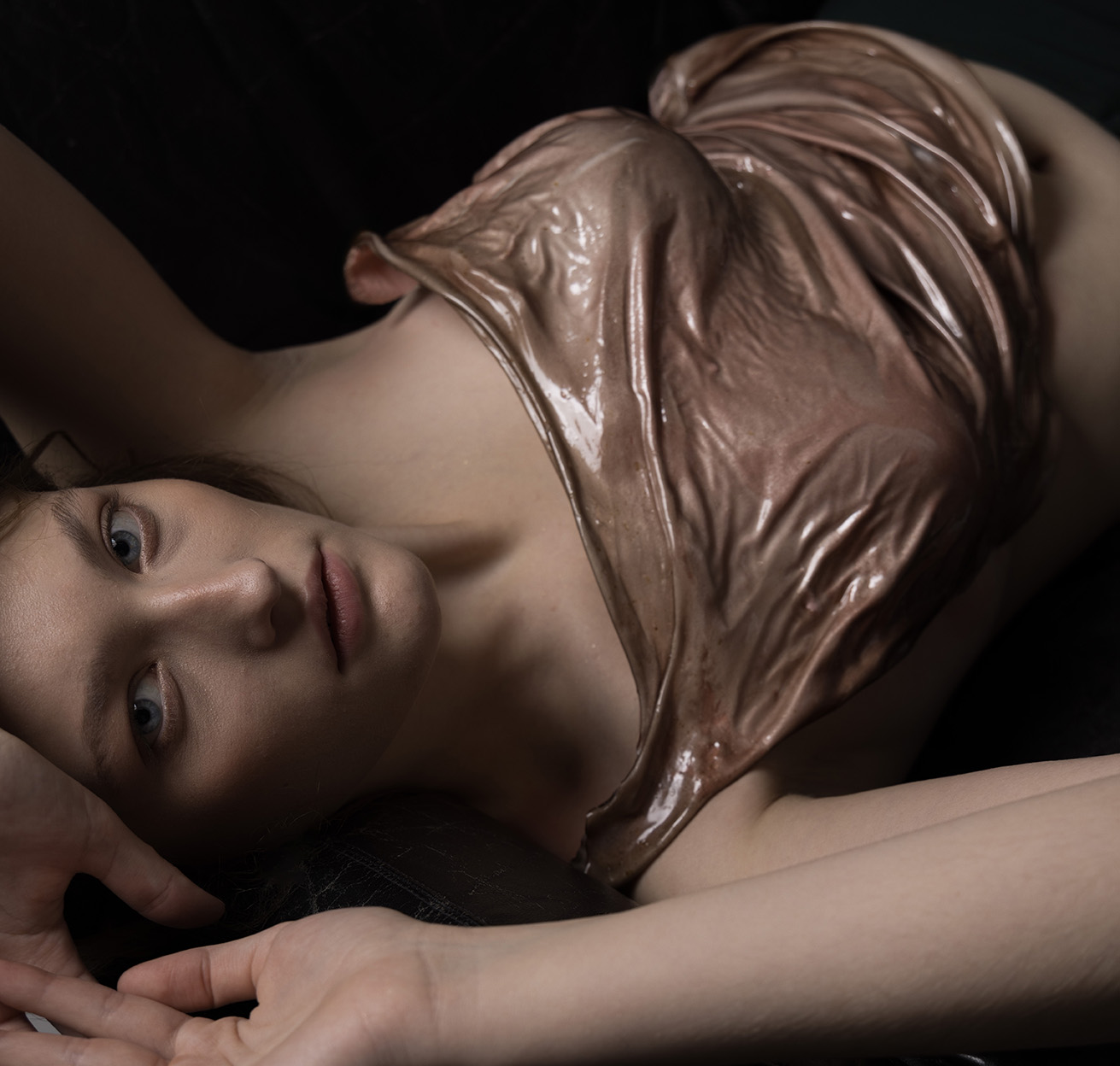
The Current top is made with a plastic-like biomaterial (mix of glycerine, water and gelatine) dyed with beet root pigments and spread onto a thin cotton cloth. The draped item was left to dry in a fume cupboard to keep the shiny surface intact.
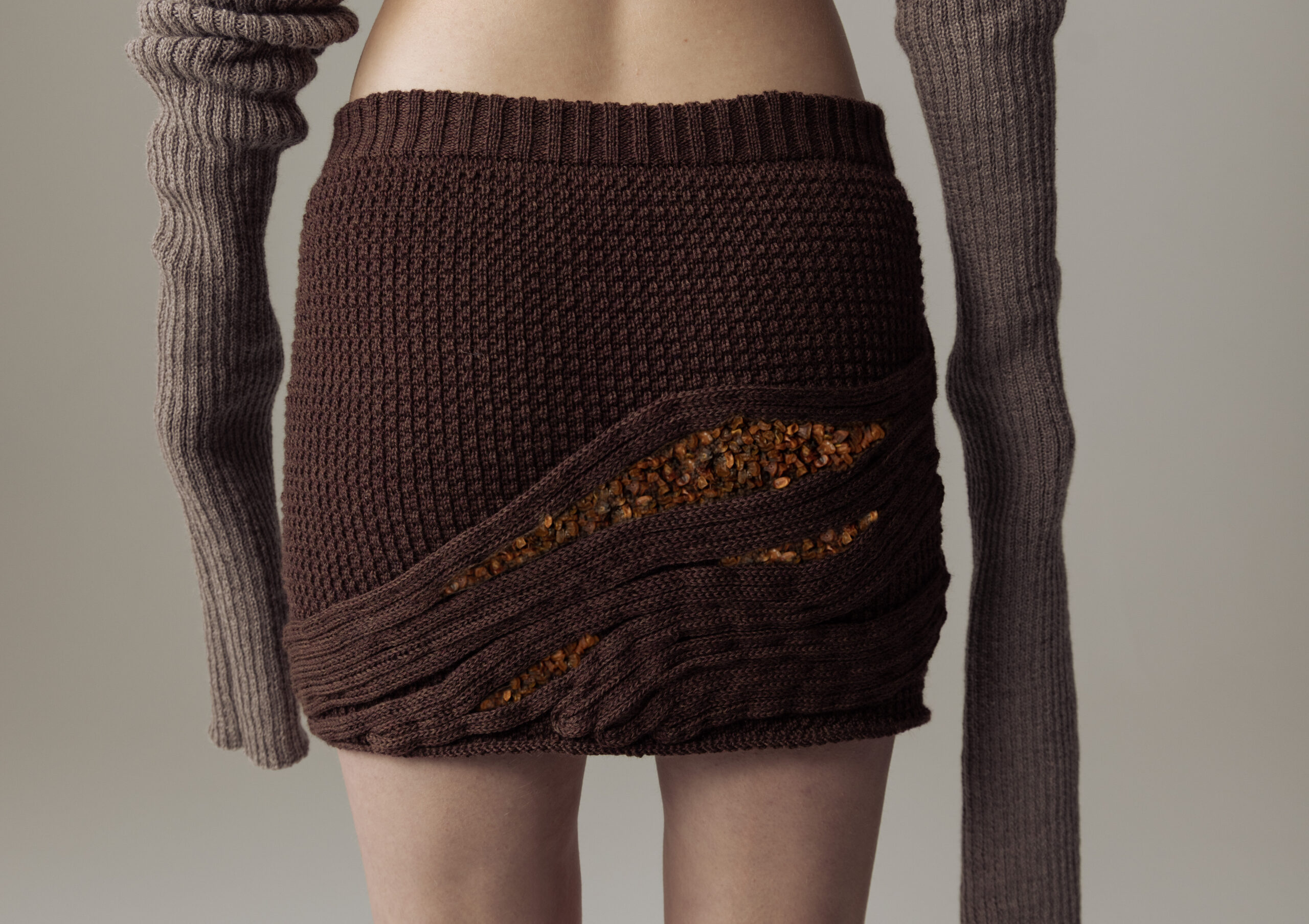
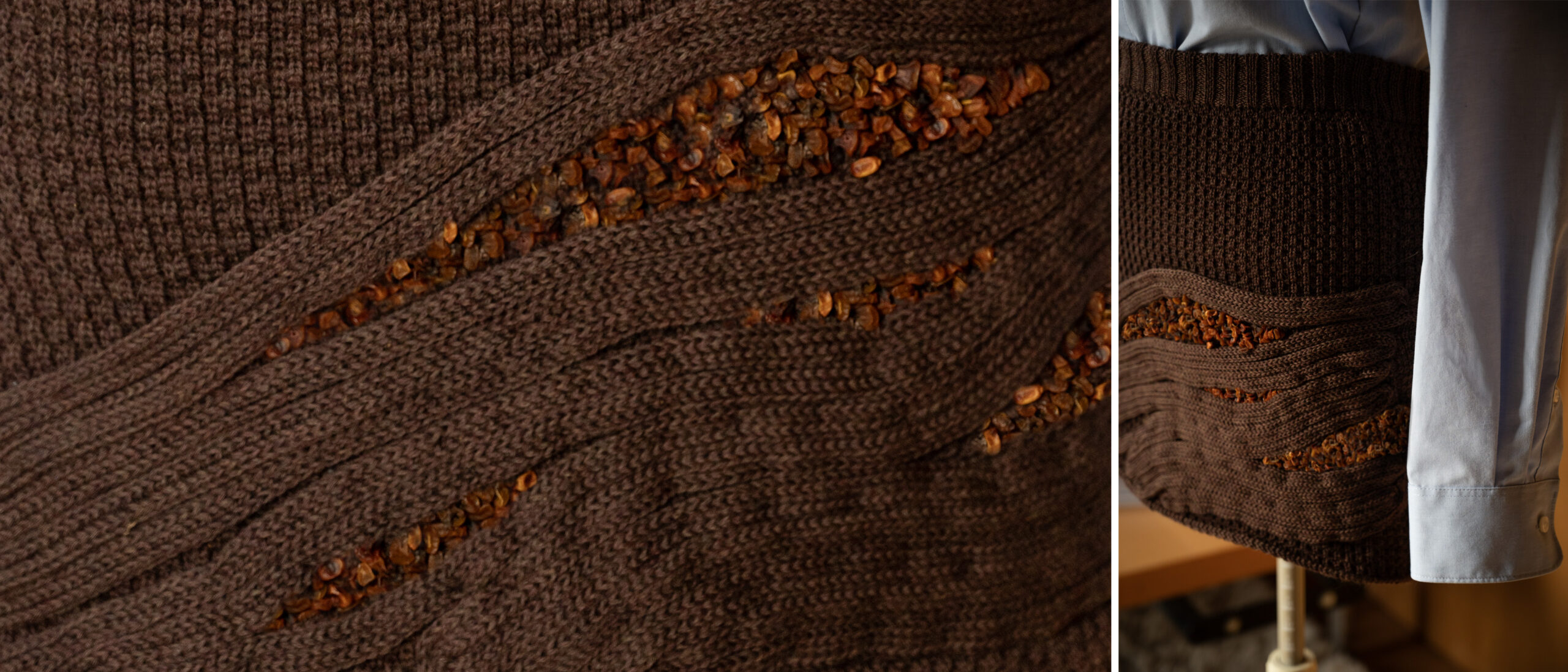
Corn
Corn has long held profound meaning in some Indigenous traditions, not merely as food but as a sacred gift that binds people to the land and to one another. In certain origin stories, life itself is born from maize, emphasising the collaboration of natural forces and human tending in the making of existence.
When I read about the ancient Indigenous folklore of the ‘corn people’, it inspired me to explore whether corn could be used for beading.
This ongoing investigation treats beading as more than ornament — it becomes a dialogue with the earth and our shared heritage of cultivation. Here, dehydrated corn kernels — coloured with red cabbage pigment and gently dried again — are stitched by hand into wool with cotton thread. In doing so, each bead carries the memory of growth: sun, soil, and water converging to co‑create with human hand.
In these compostable accents, the work honours that legacy, underlining how material, colour, and care can carry meaning without leaving a lasting trace on the world.
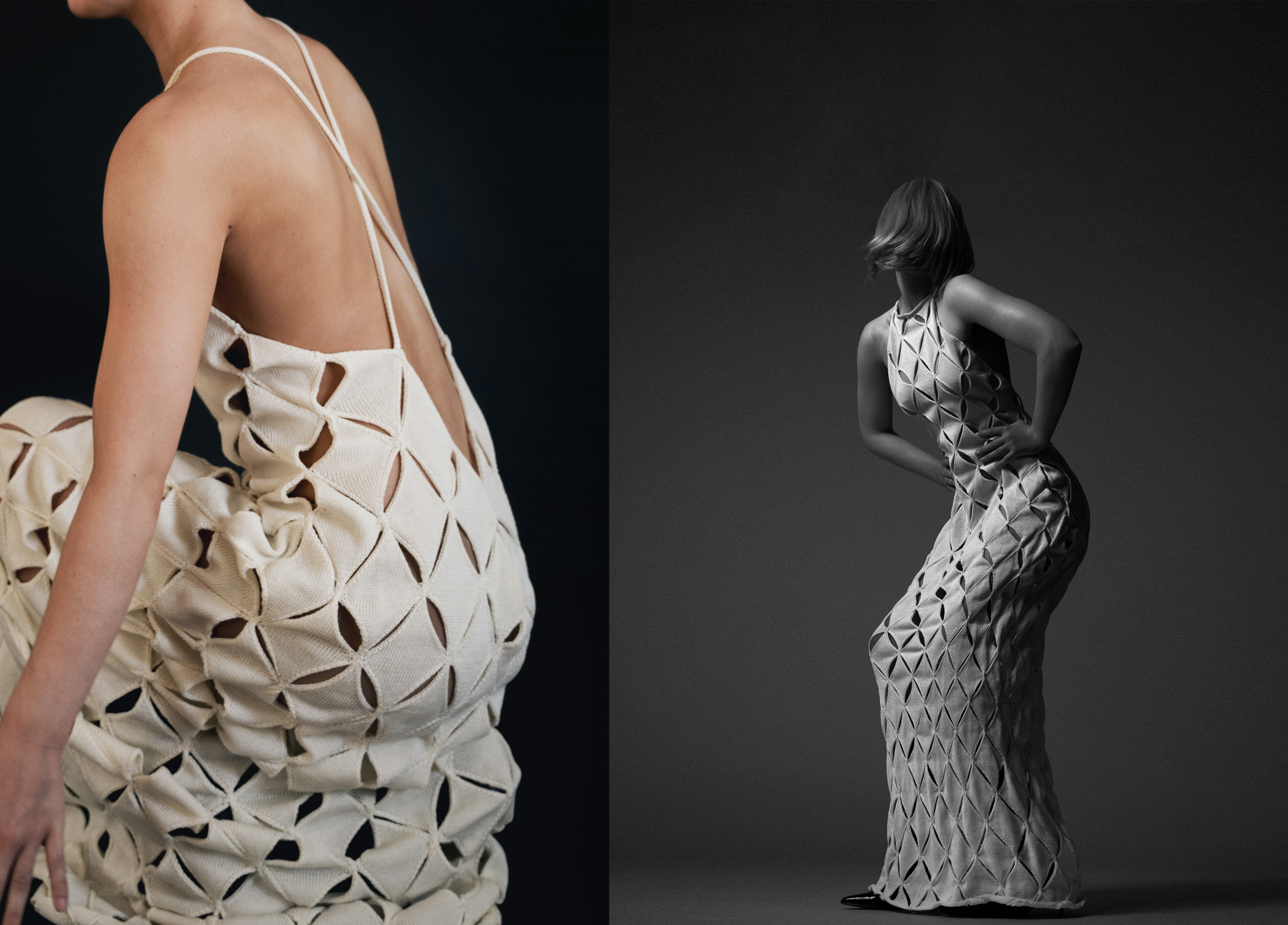
Affinity
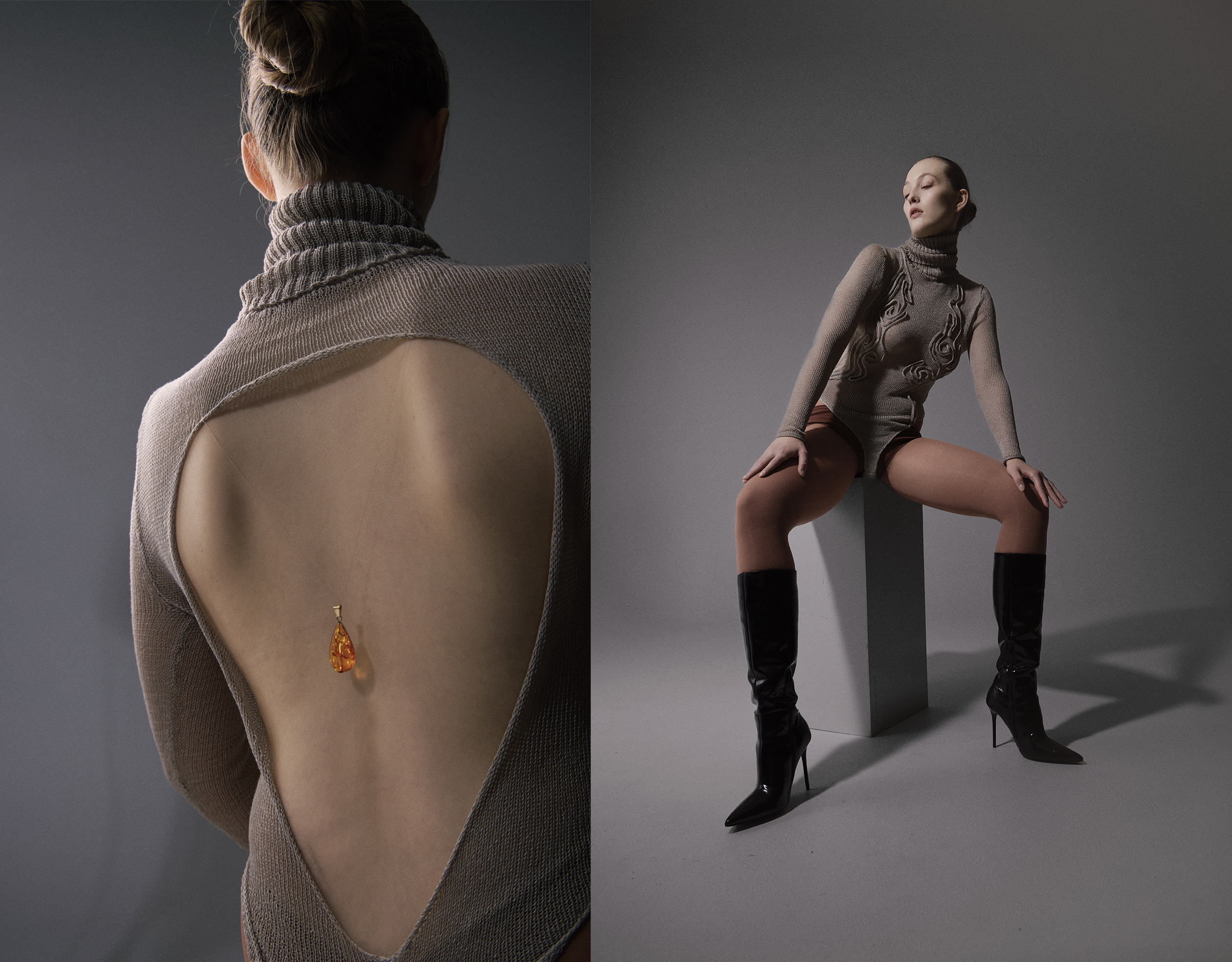
The Affinity dress is crafted partly on a Silver Reed knitting machine and partly by hand, using soft cotton yarn. It explores the interplay between technique and material, highlighting the way individual threads converge to form a greater whole. The piece reflects the idea that everything is connected, each element dependent on the other, and invites the wearer to consider their place within this shared network of relationships. In its texture, structure, and form, the dress becomes a meditation on connection, continuity, and the subtle power of interdependence.
Wood
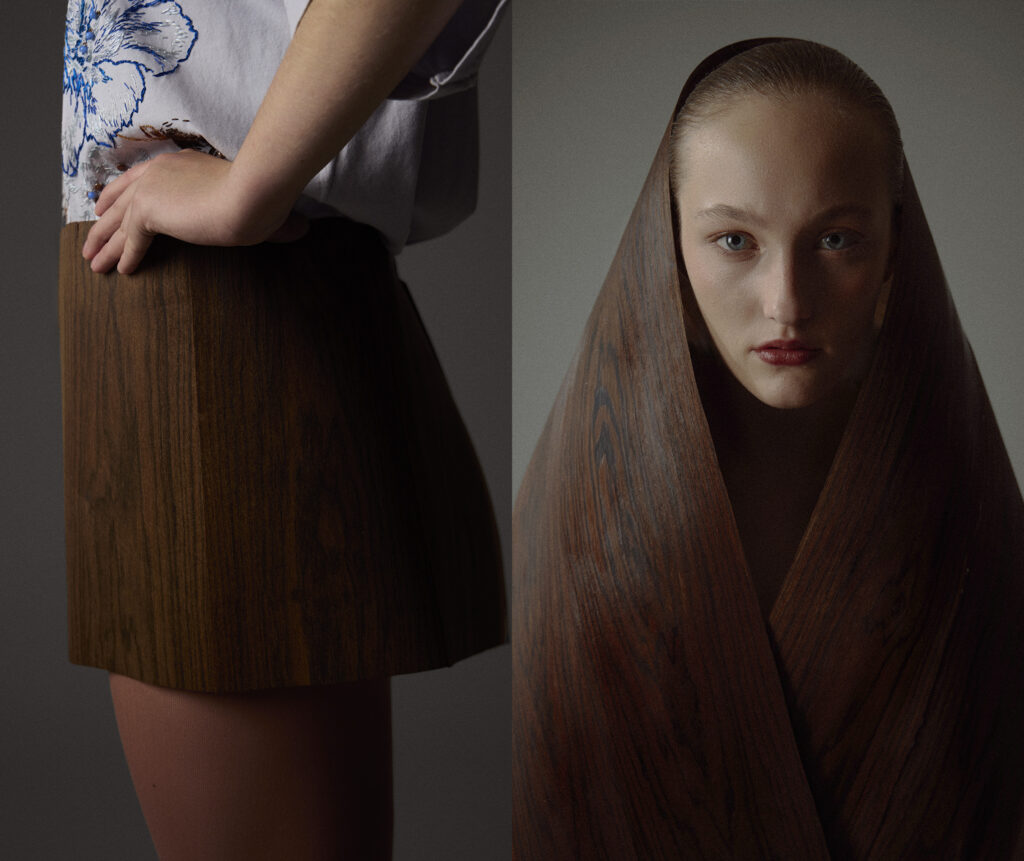
Wood is a hand-knitted piece realised partly on a Silver Reed knitting machine and partly by hand, using soft cotton yarn. Two distinct wood‑knot patterns emerge across its surface: each unique in rhythm and structure, yet they visually support and dialogue with one another, echoing the way knots and grains define a living tree.
The piece celebrates the beauty of asymmetry and the quiet balance that arises when contrasting forms coexist. Through stitch and texture, it honours the patterns found in nature, transforming the logic of growth, tension, and interconnection into a tactile experience. In Wood, every knot becomes a node of relation, each pattern a testament to resilience, interdependence, and the poetry inherent in natural structures.
Untouched
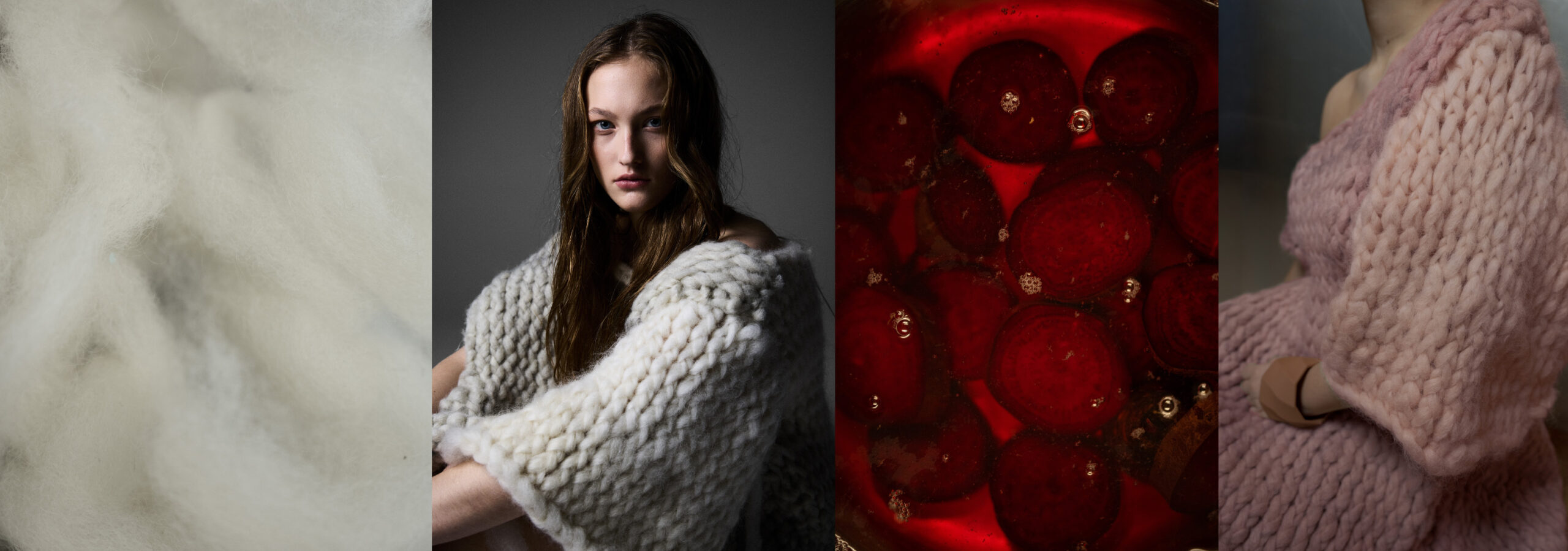
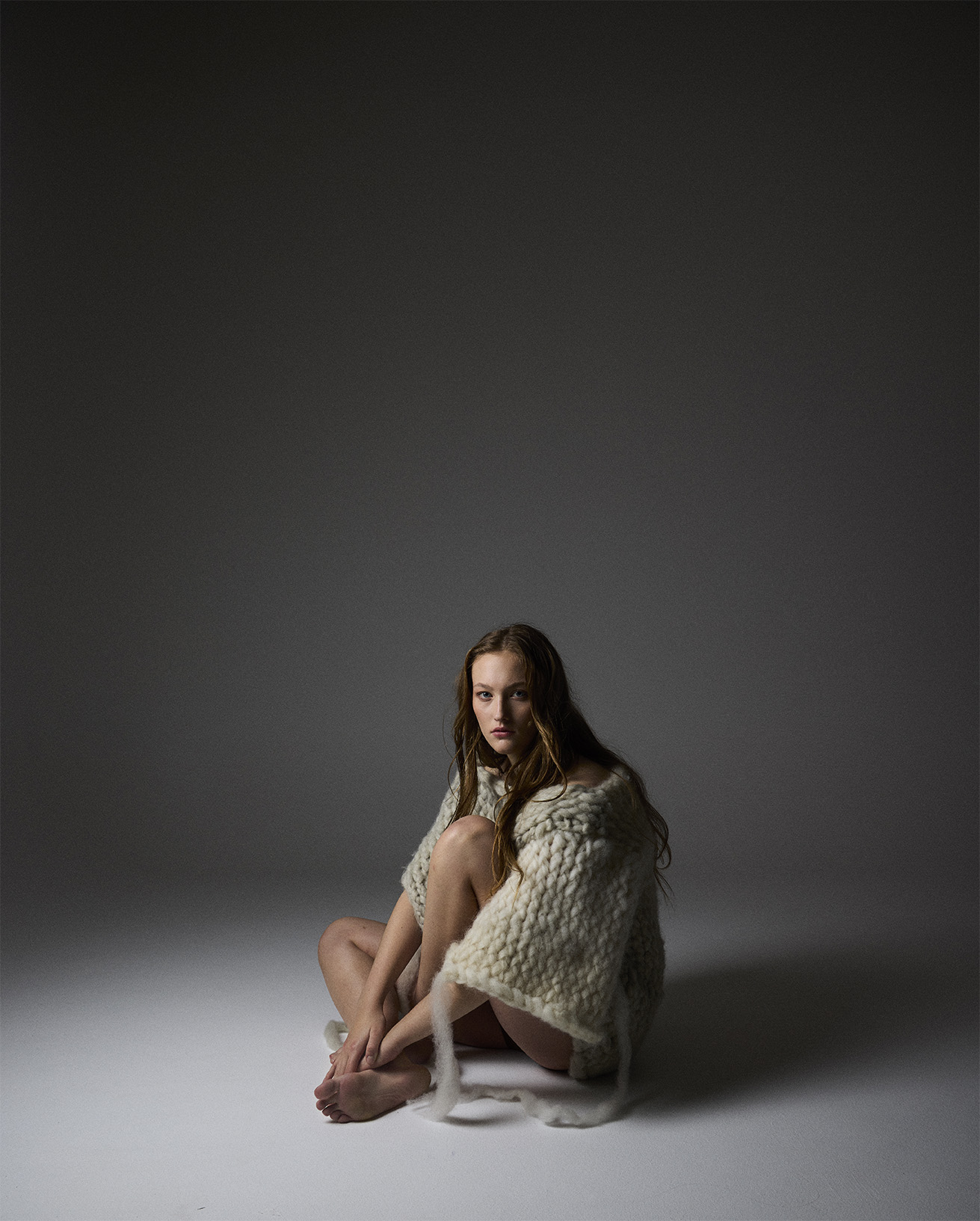
Untouched is an oversized, hand-knitted sweater made from raw wool in its most elemental state. The fibres were neither spun nor treated or dyed, but used as plain carded ropes, preserving the wool’s natural structure, irregularity, and natural itch-free softness. The garment honours the material before refinement, before polish — before intervention.
Only afterwards was it gently tinted with beetroot pigments, allowing colour to settle into the fibres without erasing their origin. The piece is 100% compostable and reflects on purity and process, on what it means to leave something intact while still transforming it. In its softness and slight resistance, the sweater carries the quiet presence of the animal, the field, and the hand that shaped it.
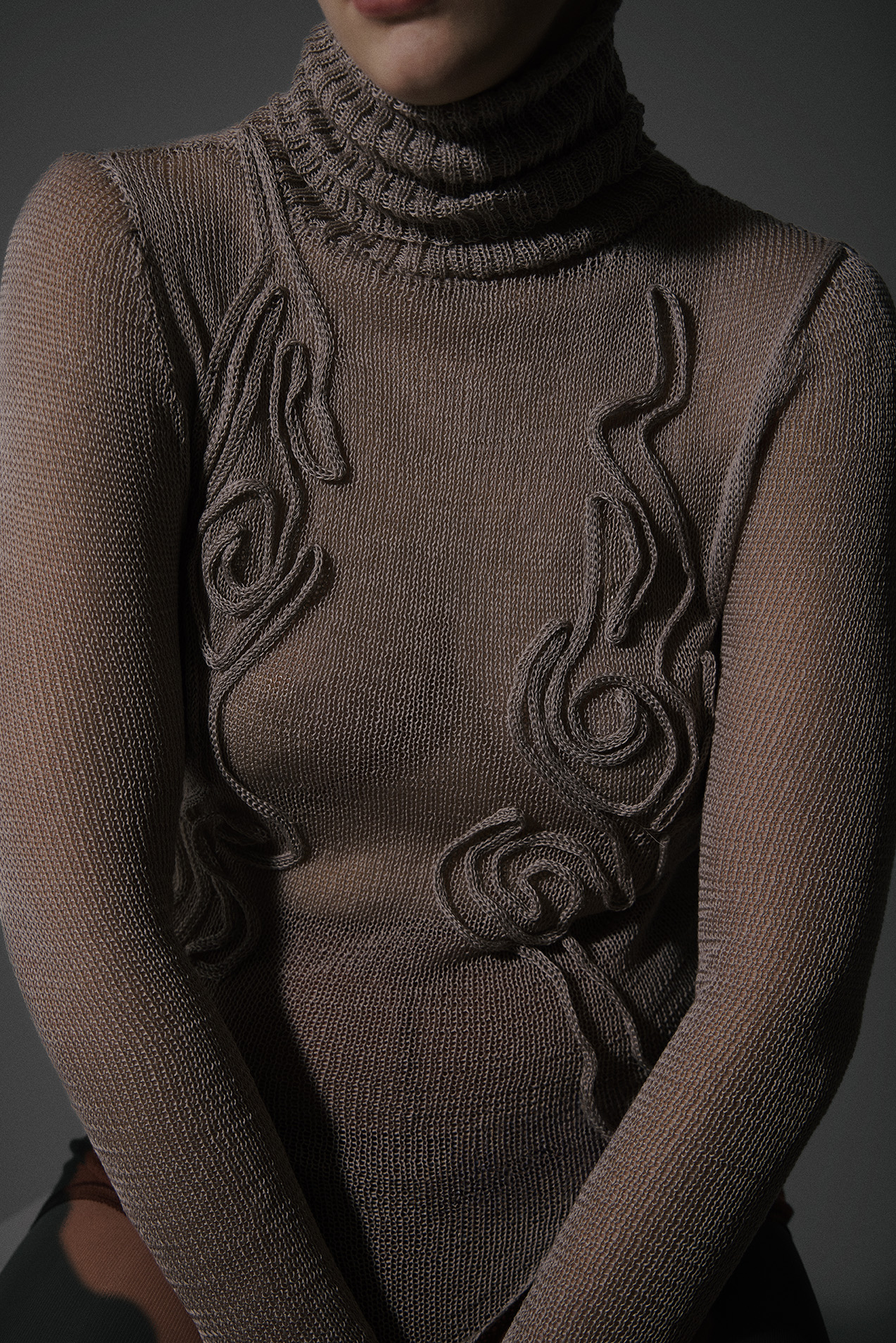
Confluence
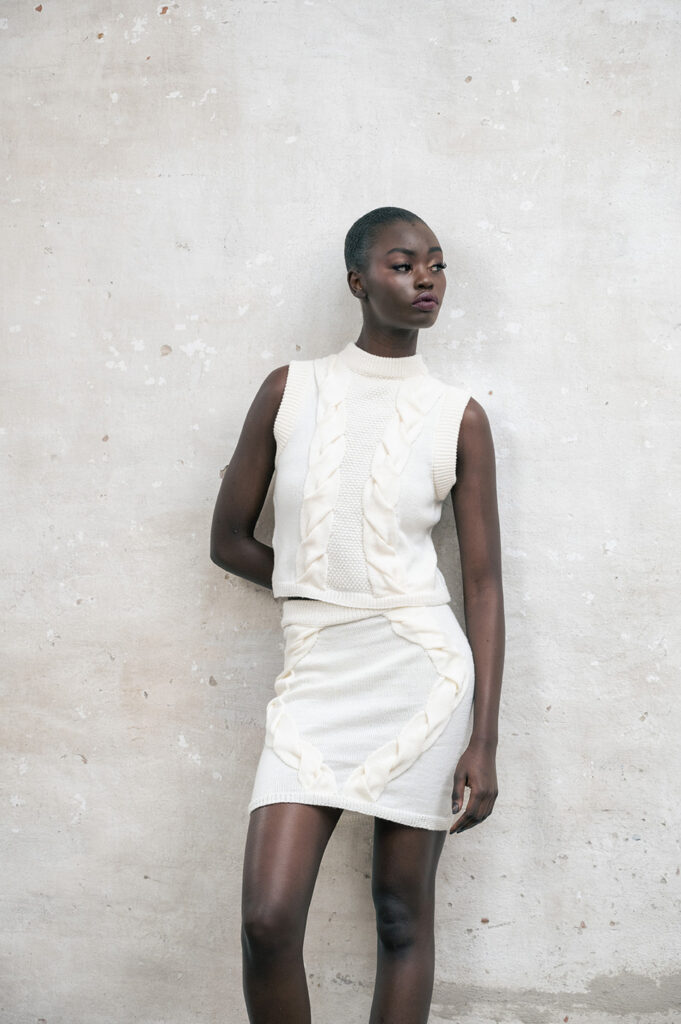
Confluence is a hand-knitted piece, crafted partly on a Silver Reed knitting machine and partly by hand, from soft, fully compostable wool. Two cables emerge together at the top, tracing a shared path before diverging, meandering through space, and finally reuniting at the base. The design embodies the tension between individuality and unity, movement and stillness, separation and return.
In its form, the garment becomes a meditation on relationships — how lives, ideas, and forces may split apart yet remain in dialogue, drawn back together by invisible currents. Every stitch traces connection and divergence, a tangible reflection of continuity and flow, making the piece not only a garment but a narrative of interdependence.
Growth
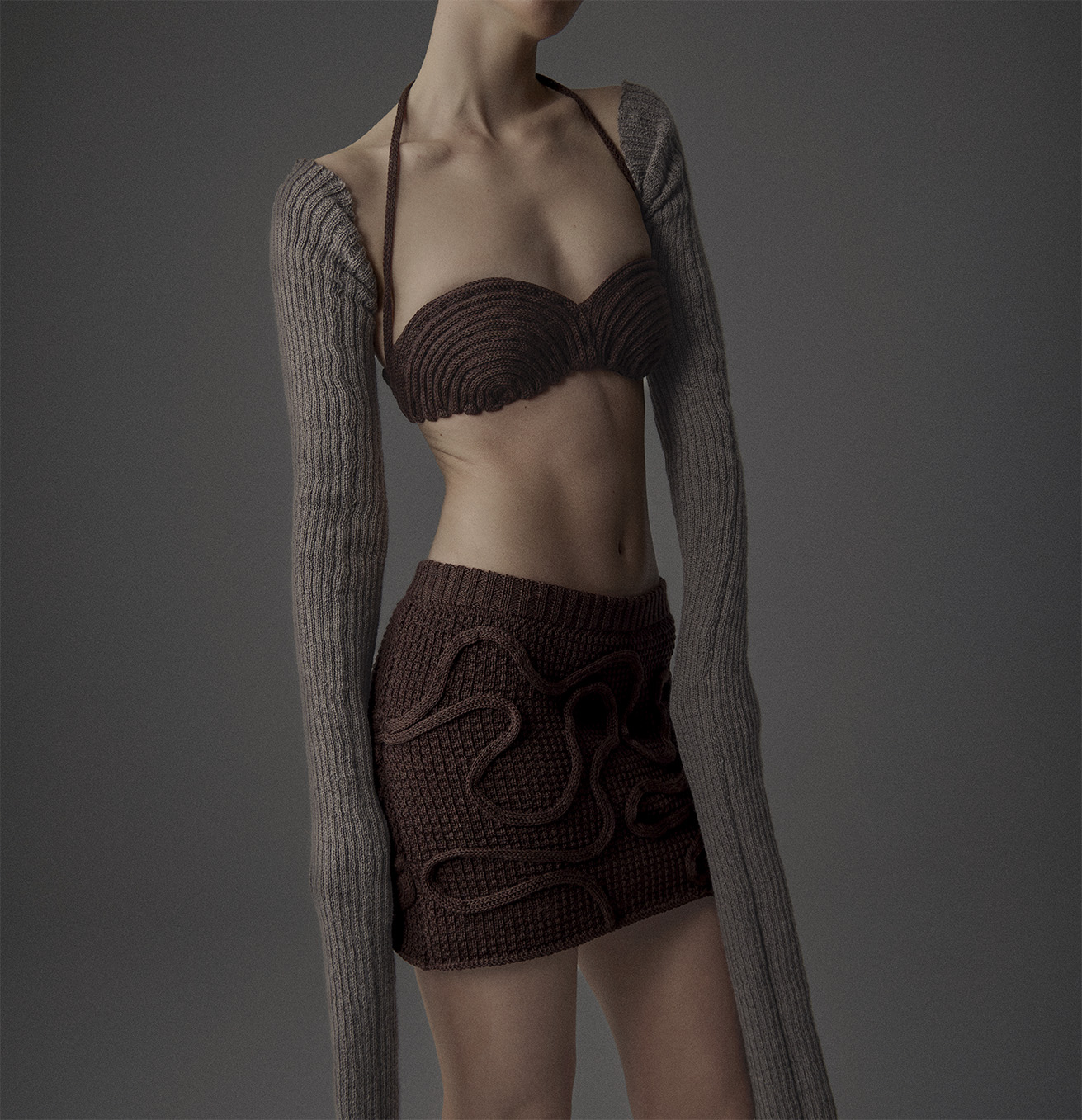
Growth is a fully compostable wool ensemble — skirt, bralette, and arm warmers — designed to honour the potential inherent in natural materials. Its sinuous patterns suggest the movement of life beneath the surface, showing how fibres, once returned to the soil, nurture new life and continue the cycle of creation.
Through its form and texture, the piece meditates on transformation, resilience, and interconnection. Growth embodies the dialogue between the living material and the earth, inviting reflection on how making, wearing, and returning can coexist in a continuous loop of renewal. Each stitch is a quiet testament to the beauty of cycles, the nourishment of life, and the enduring bond between human care and nature’s generosity.
Belonging
Showpieces made in natural wood veneer for ‘Impermanence is Life’ article in Muceum ‘To Affinity and Beyond’.
Excerpt:
Then, when you finally find yourself deep in that forest again, or standing by the shore, you reconnect. You can breathe again – perhaps for the first time in years. All tension can be released from your system, and the peace of not having to perform or be assessed fills the soul with a sense of unconditional belonging in the world.
When that feeling truly takes root in your body, and you profoundly acknowledge the benefits of this connection, how then will you go on to perceive nature? As an authority you would humble yourself to? A teacher you would eagerly learn from? A friend or life partner you would care for and nourish, as you are nourished in return? Or merely as a means to your own prosperity and an optimised ease and comfort of life?
Waterward
This project reverses the usual design priorities I follow as a fashion designer. Instead of starting with comfort, convenience, style and durability, it begins with the end: the only requirement for each piece was that it be fully compostable, capable of breaking down within a few months under the standard conditions of any home compost. The bioplastics offer a playful, colour rich and deliberately short-lived addition to the realm of truly sustainable fashion.
Working with these materials – some of which would mould within just a few days – thephrase “take a picture, it’ll last long” never felt more relevant.
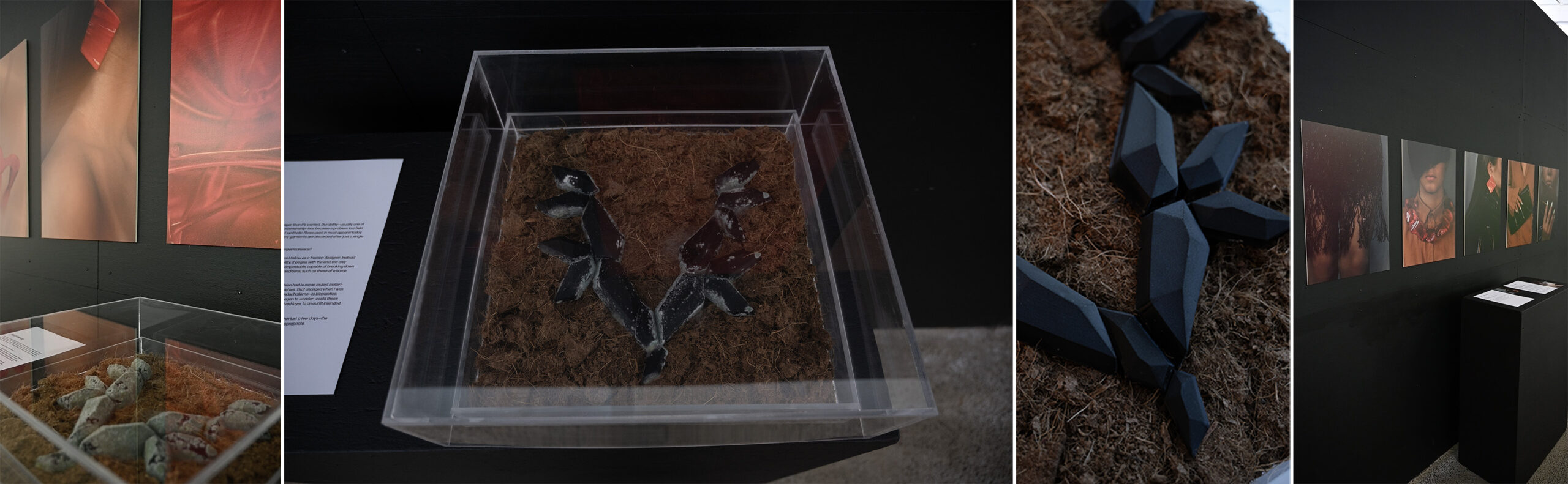
Decomposing bioplastic (made from glycerine, water and gelatine) necklace in the Exhibition: WATERWARD
part of the PLASTIC FOREVER exhibition – bioplastics, however, are intentionally made to be compostable, and NOT last forever.
Dear Plastic
It’s not you, it’s me.
Yeah –
Colours shine brighter with you,
Fashion feels lighter with you,
The fit’s a bit tighter,
And prices are righter
For a carefree night out with you.
Now everything is changing,
We don’t want the same things,
I no longer want tame things
Containing unsafe things
Those ‘keep-away-from-flame’ things.
But you’re impossible to get rid of,
You’re too widespread and too tough.
You’re too much, yet not enough,
Still, you’ll outlast us all, love.
Our heat has gone so cold,
Yet, you got me in a choke hold,
We dared to be real bold,
But the damages were tenfold.
I told you I’d grow old with you.
I liked how well I sold you,
I could bend, shape and mould you,
And I thought I could control you!
I’m sorry. I did this.
Chased power and fast clicks.
Now there is no quick fix –
It’s death by my own tricks.
I’ve not really moved on
Just went back where I belong,
Turned my back on what feels wrong,
Like the essence of that love song.
What I needed was there all along.
See, way back, before I knew you,
I’d do what most kids do,
Look to the garden in pursue,
Of nature-made things to make do,
To create something brand new,
I’d enjoy till its time was due.
Because real life is impermanent,
It’s untamed and turbulent,
Nature shouldn’t be subservient,
And man not omnipotent,
Risiking all just for a new trend.
Now here’s what’s enchanting;
A plot twist contrasting.
See, I can do fast-fashion,
With eco-empathy and compassion,
Mother Earth is my companion,
With the short lived, short lasting,
Traits of natural ressource crafting.
So yeah, it’s really not you, it’s me.
I just finally came to see,
How it was and what could be,
And the spark that set me free?
Nature – always holds the key.
(Poem by Sanne Moth)
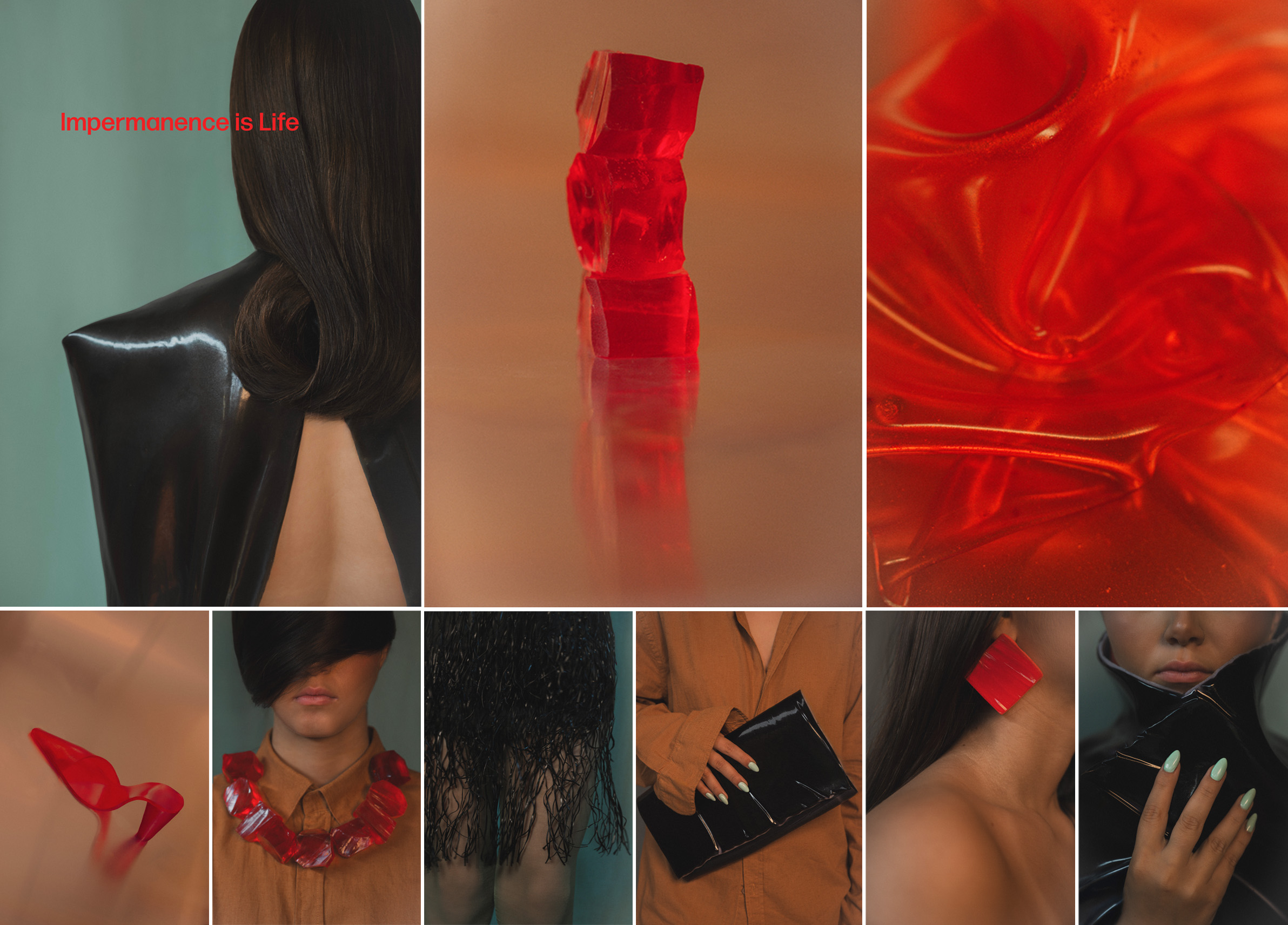
Photos and designs in plastic-like biomaterials (made from glycerine, water and gelatine)
by Sanne Moth, for the exhibition: WATERWARD
Compostable bio plastic fashion experiments
Part of the PLASTIC FOREVER exhibition 2025, in the MATERIALS MATTER biennial